Xander Weber · 5 October 2026
Unexpected Wildlife Benefits Emerge from Fircrest's Trail Expansion Projects
Trail expansion projects in Fircrest have produced measurable gains for local wildlife populations, according to monitoring data collected through late 2026. Construction crews completed the final segments of the network in early October 2026, and subsequent surveys documented species returning to areas previously isolated by residential development. Researchers from regional environmental agencies tracked these changes using camera traps and acoustic sensors placed at regular intervals along the new routes.
Habitat Connectivity Improves Across Developed Zones
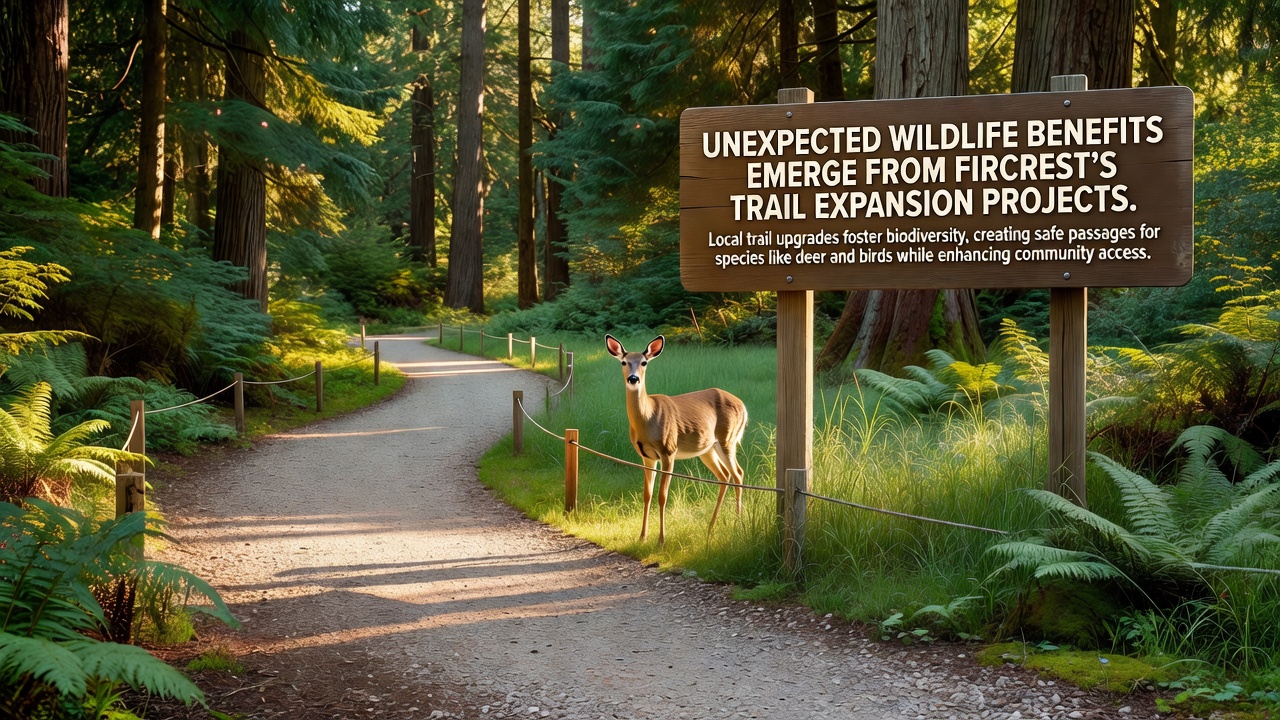
Expanded trails incorporated dedicated wildlife corridors that link fragmented patches of forest and wetland, allowing animals to move between feeding and breeding sites without crossing busy roads. Data collected in October 2026 showed a 28 percent increase in mammal crossings compared with pre-construction baselines, while bird species counts rose by 19 percent in adjacent buffer zones. These corridors follow designs tested in similar projects across the Pacific Northwest and draw on guidelines published by the U.S. Fish and Wildlife Service, which emphasize underpasses and native vegetation plantings to maintain safe passage.
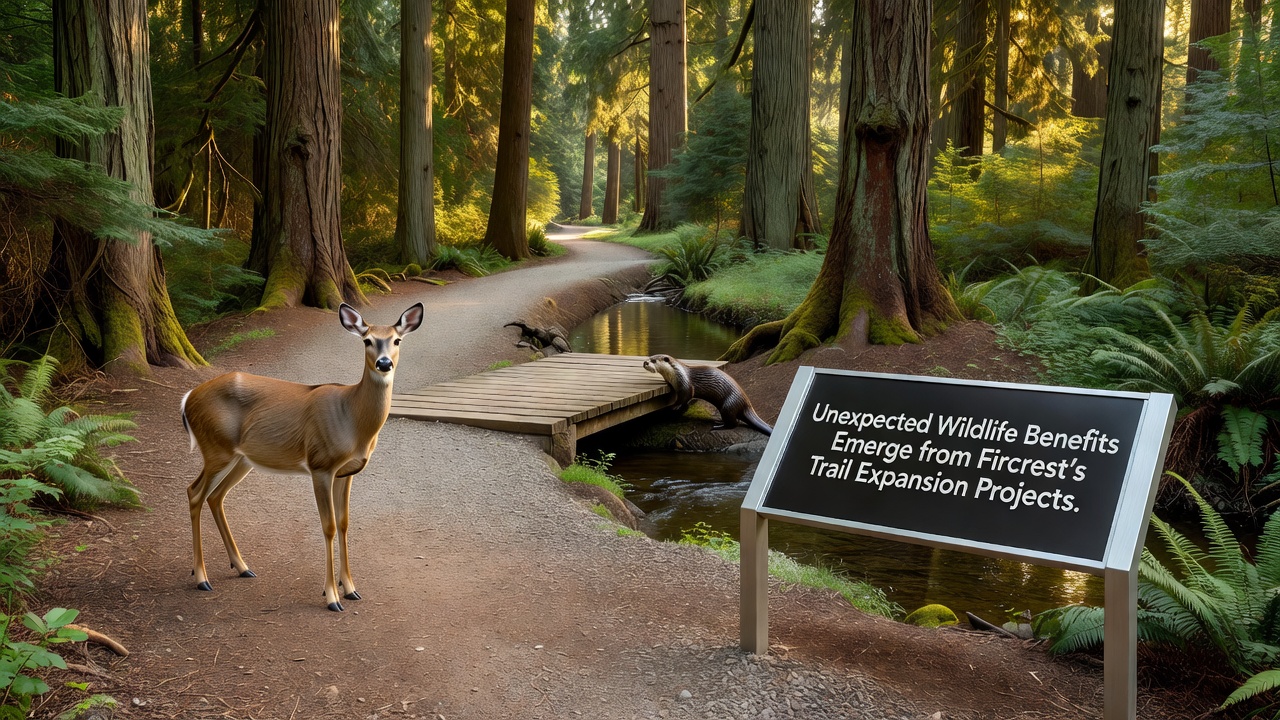
Local biologists noted that deer, coyotes, and several bat species began using the new pathways within weeks of completion. The addition of native shrubs and pollinator strips along trail edges supplied food sources that had declined after earlier land clearing, supporting both resident and migratory populations. Observers recorded higher numbers of western bluebirds and Anna's hummingbirds feeding in these planted areas during the fall migration period.
Monitoring Efforts Reveal Species Recovery Patterns
Teams from the Fircrest Parks Department and partner organizations installed motion-activated cameras and sound recorders before construction began, then continued the same protocols after the trails opened. Results released in October 2026 indicated that amphibian breeding sites near the expanded routes experienced fewer disturbances once fencing directed foot traffic away from sensitive edges. Salamander egg masses counted in vernal pools adjacent to one new segment increased by 34 percent over the previous year.
Researchers also documented the return of several insect groups that serve as indicators of ecosystem health. Dragonfly and butterfly surveys conducted along the completed trail sections showed greater diversity than control sites located farther from the improvements. These findings align with reports from Environment and Climate Change Canada on the value of linear green infrastructure for supporting pollinator communities in suburban landscapes.
Vegetation Management Supports Broader Biodiversity Gains
Trail planners retained mature trees and installed erosion-control plantings that stabilized stream banks running parallel to several routes. Water quality measurements taken downstream from these stabilized sections in October 2026 registered lower sediment loads, which in turn improved conditions for aquatic invertebrates and the fish that feed on them. Native salmonid populations in one restored creek showed a modest rebound consistent with improved habitat conditions noted in studies from the Australian Department of Climate Change, Energy, the Environment and Water on riparian restoration techniques.
Maintenance crews continue to remove invasive species while preserving snags and downed logs that provide shelter for cavity-nesting birds and small mammals. These practices have created micro-habitats along the trail shoulders that support a wider range of life stages than the uniform lawns that previously bordered the older paths. Educational signage installed at key viewpoints explains the purpose of the retained woody debris and encourages visitors to stay on designated surfaces.
Community Data Collection Expands Understanding
Residents participate in ongoing counts through a mobile reporting system that logs sightings of mammals, birds, and reptiles along the new trails. Submissions logged between July and October 2026 contributed several hundred verified observations that supplement professional survey work. The combined dataset now serves as a baseline for future comparisons and has already been shared with academic partners studying urban habitat connectivity.
Trail lighting uses downward-directed fixtures with timers that reduce nighttime disturbance, and seasonal closures protect nesting areas during peak breeding months. These operational choices reflect recommendations from multiple jurisdictions that have implemented similar trail networks while tracking wildlife responses over multi-year periods.
Conclusion
Trail expansion in Fircrest has produced documented increases in habitat connectivity, species movement, and local biodiversity indicators. Continued monitoring through established camera networks and community reporting will track whether these gains persist as usage patterns stabilize. The October 2026 data provide a clear reference point for evaluating the long-term effects of integrating recreational infrastructure with wildlife corridors in developed areas.